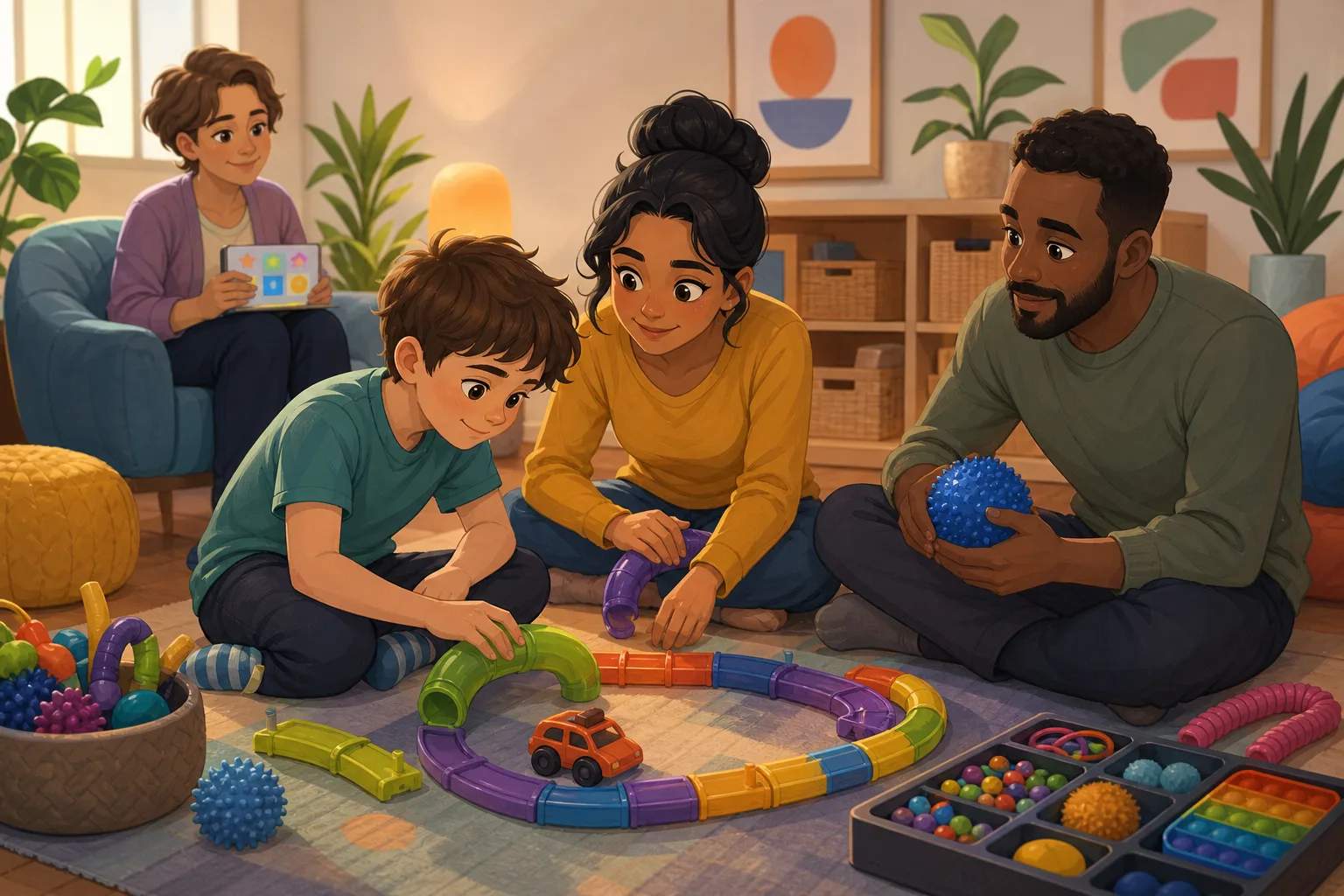
Cómo desarrollar habilidades de juego en niños autistas (sin forzar el juego simbólico)
Alinear coches no es un problema: es una etapa. Guía por niveles para ampliar el repertorio de juego respetando los intereses del niño, desde el juego sensorial hasta el juego cooperativo.
"Solo alinea los coches, no juega de verdad". Esa frase esconde una idea equivocada: que existe una única manera correcta de jugar y que las demás son defectuosas. Alinear, clasificar y ordenar es juego. Es exploración de propiedades, categorías y secuencias, y es una base excelente sobre la que construir.
LOS NIVELES DE JUEGO
Juego sensoriomotor. Explorar por el placer del estímulo: verter agua, girar ruedas, apilar y tirar, tocar texturas. Es la base de todo lo demás y nunca desaparece del todo (los adultos también hacemos girar un bolígrafo).
Juego de causa-efecto. Pulsar y que algo pase. Fundamental porque es el primer entrenamiento de la intención: "lo que hago provoca algo".
Juego constructivo y de orden. Construir torres, encajar piezas, alinear, clasificar por color o tamaño. Aquí es donde muchos niños autistas brillan y donde se les suele interrumpir en lugar de acompañar.
Juego funcional. Usar los objetos para lo que sirven: dar de comer al muñeco con la cuchara, peinar, empujar el coche por la carretera.
Juego simbólico. Un plátano es un teléfono, una caja es una nave. Requiere flexibilidad y abstracción, y suele llegar más tarde.
Juego con reglas y cooperativo. Turnos, normas explícitas, ganar y perder.
El objetivo no es saltar al último nivel, sino ampliar poco a poco el repertorio dentro y desde el nivel actual.
EL PRINCIPIO CENTRAL: ENTRA EN SU JUEGO
La estrategia con más respaldo es unirse antes que dirigir. Siéntate a su altura, haz lo que él hace en paralelo y sin invadir, y espera. Cuando te mire o te acepte, añade un pequeño elemento nuevo: si alinea coches, alinea tú los tuyos y después mete uno en un garaje improvisado. Si te rechaza, retrocede y vuelve a lo suyo. Esa negociación silenciosa es la que construye juego compartido.
ESTRATEGIAS QUE FUNCIONAN
Usa sus intereses como motor, no como premio. Si le apasionan los trenes, el juego funcional, simbólico y cooperativo puede construirse todo con trenes.
Añade una sola variable cada vez. Mismo juego, un cambio pequeño. La novedad total genera rechazo; la variación mínima genera curiosidad.
Haz visible el turno. Un objeto que se pasa de mano (un cojín, una pinza) hace mucho más comprensible el turno que cualquier explicación verbal.
Empieza los turnos con actividades que le gusten a él y que duren poco. Turnos largos + actividad indiferente = abandono garantizado.
Usa la interrupción juguetona con cuidado. Poner la mano suavemente sobre la última pieza y sonreír crea una interacción social divertida, siempre que se lea la reacción y se pare a la primera señal de malestar.
Enseña el juego con secuencias visuales. Muchos niños entran mucho antes en un juego nuevo si primero ven la secuencia en imágenes: coger la muñeca, sentar, dar de comer, limpiar.
Protege el juego solitario. Jugar solo no es un fracaso social; es descanso y regulación. El objetivo es ampliar opciones, no eliminar la que ya funciona.
SOBRE GANAR Y PERDER
Perder es difícil para casi todos los niños y más aún cuando la rigidez es alta. Empieza por juegos cooperativos donde el grupo gana o pierde junto, introduce el azar antes que la competición y verbaliza la norma antes de empezar: "a veces gano yo, a veces ganas tú, y luego seguimos jugando".
CÓMO AYUDA AUTISMDOCK
Las secuencias de micro-pasos permiten convertir cualquier juego nuevo en una secuencia de imágenes clara. Las historias sociales preparan situaciones difíciles como perder, compartir un juguete o esperar el turno. Y los minijuegos de la app están diseñados con reglas explícitas, final claro y sin recompensas aleatorias, para que sirvan de puente hacia el juego con otros en lugar de convertirse en un bucle solitario.
LO ESENCIAL
No hay juego incorrecto. Entra en el juego que ya existe, añade una variable cada vez y deja que el repertorio crezca desde dentro.
Explora nuestros últimos artículos sobre concienciación, investigación, terapias e historias comunitarias.
AutismDock →Blog de autismo: guías prácticas
Autismo y colegio: derechos, adaptaciones y qué pedir
📚 EducaciónMatemáticas para niños con autismo: aprovechar el pensamiento visual
📚 EducaciónJuegos de memoria para niños con TEA: por qué funcionan tan bien
📚 EducaciónCómo pedir adaptaciones escolares para tu hijo autista
📚 EducaciónInclusión escolar real: 12 adaptaciones de aula que sí funcionan
📚 EducaciónEducar en casa a un niño autista: métodos y recursos
AutismDock es gratuito y sin publicidad. Si te ha servido, puedes apoyarlo →