Autism and Medical Conditions: Signs You Shouldn't Ignore
Many physical symptoms are wrongly blamed on autism and go untreated. Learn the most common co-occurring conditions, warning signs, and how to prepare.
There's a well-documented and very damaging phenomenon called diagnostic overshadowing: once someone has an autism diagnosis, any new symptom tends to be attributed to autism rather than investigated. The result is pain, infections, and illnesses that go untreated for years.
THE MOST COMMON CONDITIONS
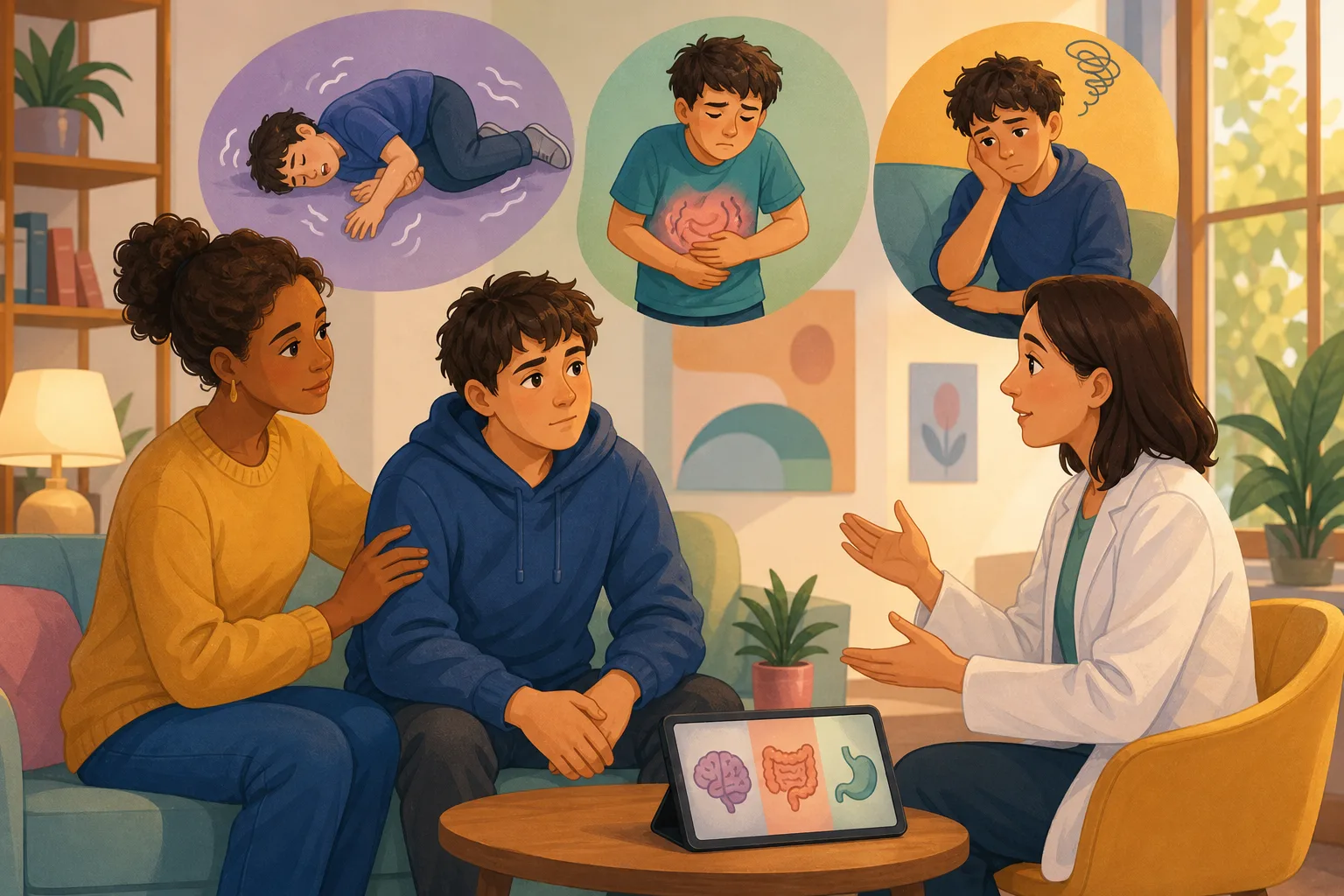
Gastrointestinal problems. Far more common than in the general population: chronic constipation, reflux, abdominal pain, diarrhoea. In a child who doesn't verbalise pain, significant constipation can show up as irritability, loss of appetite, increased abdominal-pressure behaviours, or recurring meltdowns at the same time each day.
Epilepsy. Prevalence in autism is markedly higher than in the general population, with two typical peaks: early childhood and adolescence. Not all seizures are obvious convulsions: brief absences (a fixed stare for a few seconds, losing the thread, rhythmic blinking) are often mistaken for zoning out or "being in their own world."
Sleep disorders. Very frequent, and in many cases with treatable medical causes behind them: apnoea, reflux, circadian rhythm disruption, pain.
Dental problems and ear infections. Reduced pain sensitivity and difficulty reporting it mean major cavities or recurrent otitis often go unnoticed until advanced stages.
Feeding difficulties and nutritional deficits. Extreme selectivity can lead to iron, vitamin D, or vitamin C deficiency. Periodic blood work is worthwhile when the diet is very restricted.
Mental health. Anxiety and depression are far more common, especially in adolescence and in people who mask.
Others: low muscle tone and motor difficulties, continence problems, joint hypermobility, allergies.
SIGNS THAT WARRANT AN APPOINTMENT
A sudden behaviour change with no clear environmental cause. Regression of already-acquired skills. New pressing or hitting behaviours aimed at one body area. Night waking with intense crying. Loss of appetite or a change in bowel patterns. Brief episodes of disconnection with a fixed stare. A sudden increase in self-injury: very often a pain signal.
The practical rule: with any sudden behaviour change, rule out pain and medical causes first.
HOW TO PREPARE FOR THE APPOINTMENT
Bring data, not impressions. A two-week log with times, sleep, bowel movements, food, and behaviour episodes is worth more than any verbal description.
Prepare the child with visual anticipation: what will happen, in what order, how long it will take.
Ask for the first or last appointment of the day to reduce waiting and waiting-room noise.
Tell the clinic about sensory and communication needs before you arrive.
Bring the communication passport: how they express pain, which words or pictures they use, what calms them, what dysregulates them.
Explain before touching and use gradual exposure to the instruments.
HOW AUTISMDOCK HELPS
Daily logging lets you document sleep, food, pain, and behaviour and export a summary for the appointment. Social stories and micro-step sequences prepare doctor visits, blood tests, or dental check-ups step by step. The communication passport summarises the key information for any health professional on a single page, and the body and health pictograms let a person point to where it hurts even without spoken language.
THE BOTTOM LINE
Autism doesn't hurt. If behaviour changes suddenly, something needs investigating. Keep pushing until someone looks past the diagnosis.
Explore our latest articles on autism awareness, research, therapies, and community stories.
AutismDock →Autism blog: practical guides
Autism and Hormones in Women: Periods, Pregnancy and Menopause
❤️ HealthInteroception and Autism: Why Your Child Misses Hunger and Thirst
❤️ HealthAutism and ADHD Together: What AuDHD Is and Why It Conflicts
❤️ HealthAutism in Girls and Women: Why Diagnosis Often Comes Late
👨👩👧 Family SupportAutistic Teenage Girls: Signs, Changes and Support
🧠 Mental HealthAutism and ADHD in Women: Why They're Confused and Combined
AutismDock is free and ad-free. If it helped, you can support it →