Autistic Burnout in Adults: Signs, Causes and Recovery
Autistic burnout is not depression or laziness. Learn the signs, why it happens, how it can affect anger, and what supports recovery.
Many autistic adults come to therapy with one of two sentences: "I shut down for weeks" or "I explode over tiny things and then hate myself." They're two faces of the same process.
WHAT AUTISTIC BURNOUT IS
It's a state of deep exhaustion, skill loss, and increased sensory sensitivity, caused by a chronic mismatch between environmental demands and a person's actual capacity. It isn't depression, though it can lead there. The key difference: in autistic burnout, rest and reduced demands clearly help, and interest in your own topics returns once the load drops.
Typical signs: losing speech or finding talking exhausting, being unable to cook or shower, no longer tolerating noises you used to, forgetting automatic routines, crying for no apparent reason, and a physical sense of being burnt out from the inside.
WHY IT HAPPENS
The most common causes are years of sustained masking, work or study without accommodations, major life changes (moving, parenthood, bereavement), sensory-hostile environments, and no real recovery time. Masking is the strongest factor: maintaining a socially acceptable version of yourself eight hours a day consumes resources nobody replaces.
MELTDOWN, SHUTDOWN, AND ANGER
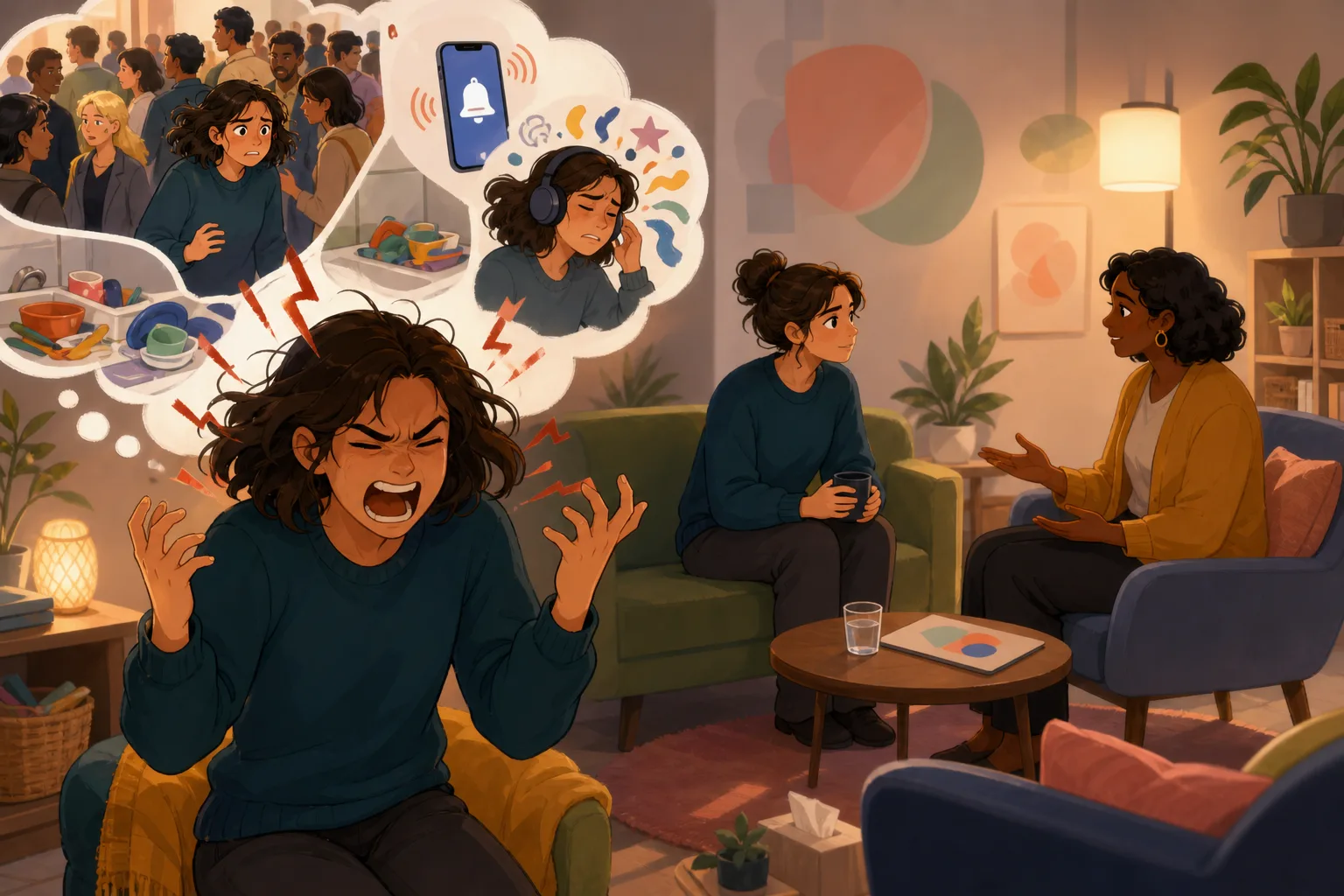
A meltdown is an involuntary overload response that goes outward: shouting, crying, slammed doors, words you wouldn't say. A shutdown is the same overload going inward: silence, freezing, an inability to respond.
Neither is a tantrum or manipulation. The person isn't choosing, which is why punishment and heated conversations don't work.
The "autistic adult anger" so many people search for is usually a delayed meltdown. Interruptions, noise, plan changes, and social demands accumulate, and the final trigger is absurd: someone moves a chair, changes a lunch order, or asks a question while you're cooking.
THE PREVENTION PLAN
-
Identify your real load. For two weeks, rate your energy on waking and going to bed and note what dropped it. The pattern shows up fast.
-
Set a social budget. Decide how many social events you can handle per week and treat it as a medical limit.
-
Reduce masking in safe zones. Free stimming at home, headphones outside, warm lighting, comfortable clothes.
-
Automate everyday life. Repeated meals, the same clothes, saved routines. Save creativity for what matters, not for deciding dinner.
-
Schedule recovery after events, not before. A social day requires an empty evening afterwards.
-
Learn your early warning sign. Almost everyone has one: irritability with sound, not answering messages, avoiding showers. That sign means reduce demands today, not next week.
WHAT TO DO DURING A MELTDOWN
If it's you: lower the input (light, sound, touch), retreat to a small space, deep pressure or a weighted blanket, repetitive movement, zero decisions. If you're supporting someone: reduce noise, don't ask questions, offer water and space, and talk afterwards, not during.
RECOVERY IS SLOW
Months of burnout don't resolve over a weekend. Real recovery usually requires weeks of reduced demands and often structural change: cutting hours, requesting accommodations, changing roles, or ending relationships that require constant performance.
HOW AUTISMDOCK HELPS
Mood logging lets you see the energy curve before a collapse, and saved routines cut decisions on bad days. There are also sensory calm spaces and transition timers. It doesn't cure burnout, but it turns a vague feeling into data you can use to negotiate accommodations at work or with family.
THE BOTTOM LINE
You don't explode because you have a bad temper: you explode because you've been spending more than you take in for weeks. The goal isn't to endure more, it's to spend less.
Explore our latest articles on autism awareness, research, therapies, and community stories.
AutismDock →Autism blog: practical guides
Autism in Adult Women: Signs and Why Diagnosis Is Late
🌱 AdulthoodLevel 1 Autism in Adults: What It Really Means
🌱 AdulthoodAm I Autistic? What AQ, RAADS-R and CAT-Q Actually Measure
🌱 AdulthoodAdult Autism Diagnosis: Who Can Do It and What to Expect
🌱 AdulthoodSigns of Autism in Adults: 12 Traits That Go Unnoticed
🌱 AdulthoodSex Education in Autism: Privacy, Boundaries and Safety
AutismDock is free and ad-free. If it helped, you can support it →