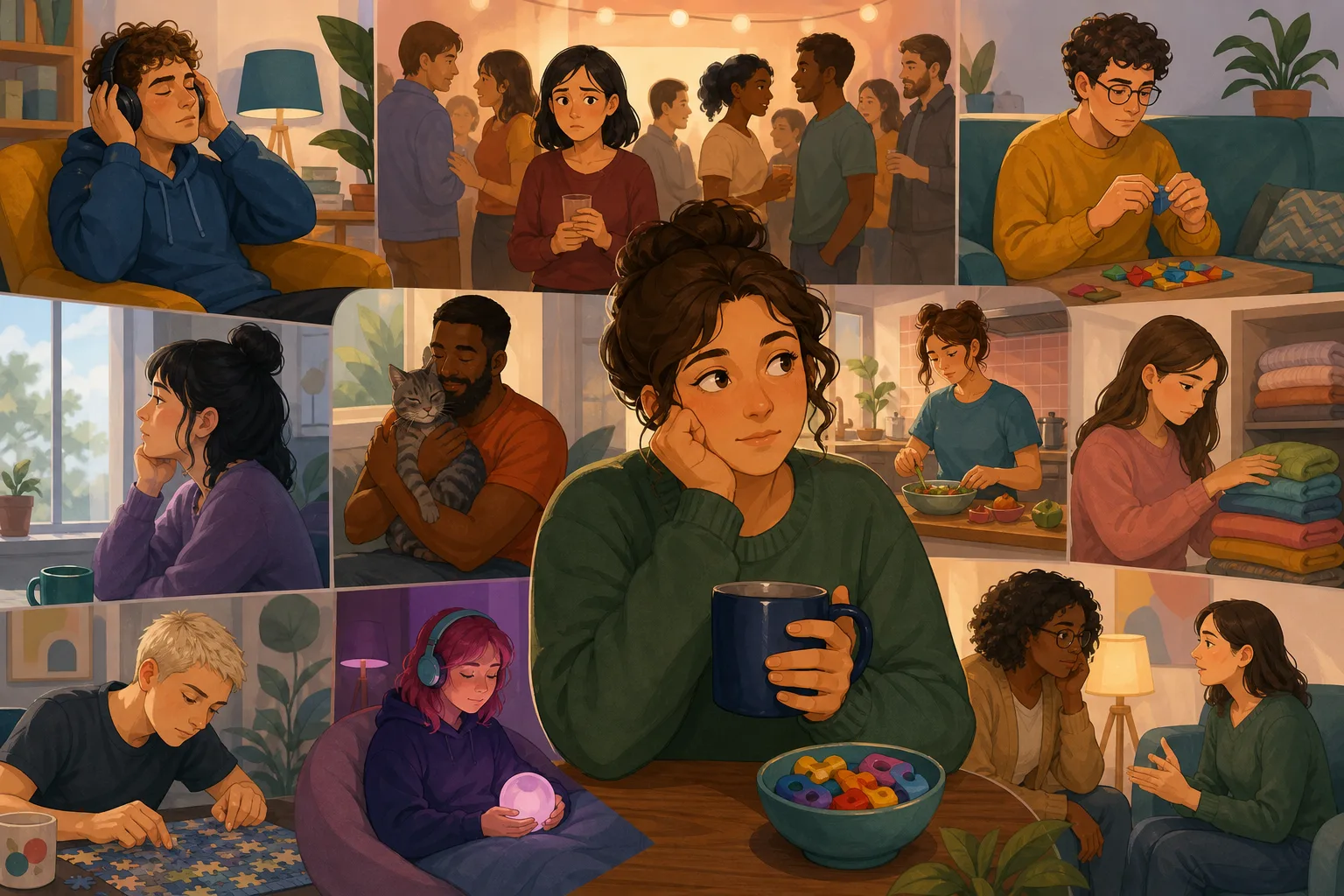
Signs of Autism in Adults: 12 Traits That Go Unnoticed
Many autistic adults reach 30, 40 or 50 without a diagnosis. Learn the adult signs, how they differ from shyness or anxiety, and what to do next.
For decades autism was believed to be something you spot in childhood and nowhere else. We now know that most autistic adults from earlier generations were never assessed: they were labelled odd, intense, shy, difficult, or simply people who tire easily.
WHAT AUTISM LOOKS LIKE IN AN ADULT
In adulthood autism rarely resembles the stereotype of a child lining up cars. It looks like a stable lifelong pattern of differences in social communication and sensory processing, alongside deep interests and a need for predictability.
THE 12 MOST COMMON SIGNS
-
Disproportionate social exhaustion. It isn't that you dislike people: socialising burns an amount of energy others don't seem to spend.
-
Needing a script. You mentally rehearse phone calls, ordering at a bar, or lift conversations.
-
Literal interpretation. Double meanings, irony, or "you know what I mean" force an extra layer of translation.
-
Deep interests. Topics that absorb your attention entirely for months or years, at a level of detail that surprises others.
-
Sensory sensitivity. Fluorescent lights, background noise, clothing tags, strong smells, or specific food textures that feel intolerable.
-
Routines and rituals. Last-minute plan changes that trigger an emotional reaction far bigger than the situation warrants.
-
Difficulty with eye contact, or a learned, forced eye contact you have to hold consciously.
-
Discreet repetitive movements: bouncing a foot, spinning a ring, biting the inside of your cheek, squeezing objects.
-
Few but intense friendships. Very deep bonds with two or three people, and emptiness with everyone else.
-
An uneven work history: technical brilliance combined with trouble in the social, political, or "fitting in" side of teams.
-
Previous diagnoses that never quite fit: anxiety, depression, borderline personality, ADHD, social phobia.
-
Periodic shutdowns. Weeks where you can't speak, answer messages, or leave the house after a period of overload.
AUTISM, SHYNESS, OR SOCIAL ANXIETY
The key distinction is why and since when. In social anxiety there's fear of judgement and social skills are intact; in autism there's a genuine difference in how communication is processed, present since childhood and stable across all contexts, even with trusted people. Sensory overload is central to autism and not to social anxiety.
WHY SO MANY ADULTS FIND OUT NOW
Three reasons: diagnostic criteria changed in 2013 to include profiles without intellectual disability or language delay; many adults learned to camouflage so effectively that nobody suspected; and the trigger is often a child's diagnosis, when a parent recognises themselves in every paragraph of the report.
WHAT TO DO IF YOU RECOGNISE YOURSELF
Don't jump to conclusions or to panic. Write down concrete examples from your childhood and your current life, talk to relatives who remember what you were like as a child, and if you want to move forward, seek an assessment with a professional experienced specifically in adult autism. Recognising yourself doesn't change who you are: it changes the explanation you give yourself, and that's usually an enormous relief.
TOOLS THAT HELP DAY TO DAY
Many autistic adults use supports associated with childhood that work just as well at 40: visual anticipation of the day, timers for transitions, mood logging to catch overload before shutdown, and sensory calm spaces. AutismDock offers these in an adult mode, without childish styling.
THE BOTTOM LINE
Adult autism isn't a different autism: it's the same one, filtered through decades of adaptation. If this list described you, you're not broken; you've probably spent years running in an environment that was never designed for your brain.
Explore our latest articles on autism awareness, research, therapies, and community stories.
AutismDock →Autism blog: practical guides
Autism in Adult Women: Signs and Why Diagnosis Is Late
🌱 AdulthoodAutistic Burnout in Adults: Signs, Causes and Recovery
🌱 AdulthoodLevel 1 Autism in Adults: What It Really Means
🌱 AdulthoodAm I Autistic? What AQ, RAADS-R and CAT-Q Actually Measure
🌱 AdulthoodAdult Autism Diagnosis: Who Can Do It and What to Expect
🌱 AdulthoodSex Education in Autism: Privacy, Boundaries and Safety
AutismDock is free and ad-free. If it helped, you can support it →