Adult Autism Diagnosis: Who Can Do It and What to Expect
How an adult autism assessment really works: who can diagnose, which tools are used, how long it takes, what it costs, and what the report changes.
Seeking an autism assessment as an adult raises very practical questions: who to go to, what they'll ask, what it costs, and whether it's worth it at 45. Here are the answers in order.
WHO CAN DIAGNOSE
Diagnosis is made by a qualified health professional: a clinical psychologist, psychiatrist, or neurologist with specific training in adult neurodevelopmental conditions. What matters isn't the title but real experience with adult profiles, especially people who camouflage well. A clinician who has only assessed children can easily miss a compensated adult profile.
WHAT THE PROCESS LOOKS LIKE
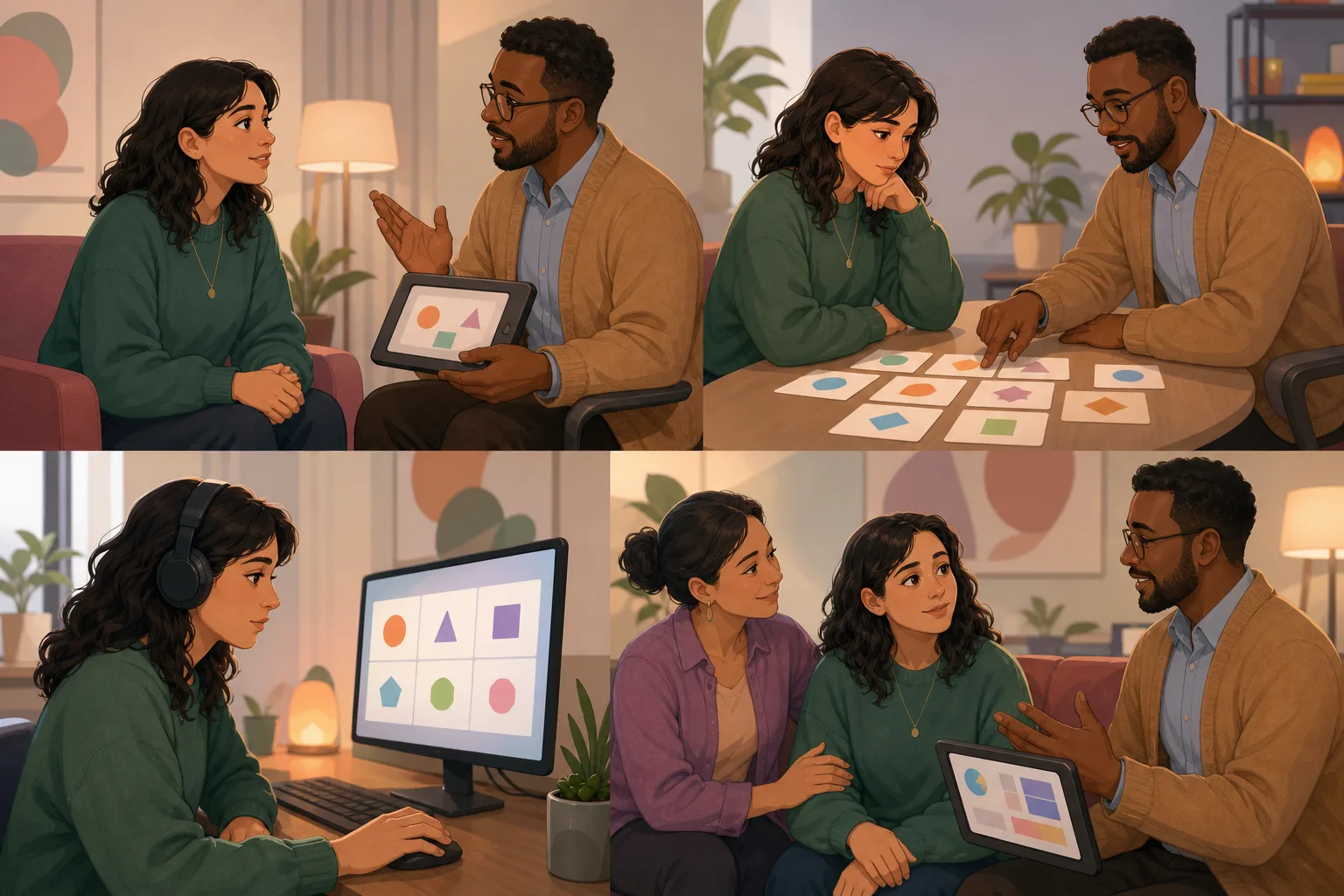
A serious assessment has several stages and is not settled in one 50-minute session.
First, an extensive clinical interview covering your developmental history, childhood, school, relationships, work, sensory profile, and mental health. It usually takes two to four hours across several appointments.
Second, third-party information. Where possible, the clinician will want to speak with a relative who remembers your childhood, because diagnostic criteria require traits to be present from early development.
Third, standardised instruments. The most common are ADOS-2 Module 4 (structured observation of interaction), ADI-R (developmental interview with an informant), and screening questionnaires such as AQ, RAADS-R, or CAT-Q for camouflaging.
Fourth, differential diagnosis. ADHD, anxiety, trauma, OCD, personality disorders, and giftedness are ruled out or accounted for, since they often co-occur.
Fifth, a written report with conclusions, support-needs level, and recommendations.
WHAT A DIAGNOSIS IS NOT
An online test does not diagnose. Neither does a video, an AI, or a twenty-minute appointment. Questionnaires are useful as a starting point and to structure the conversation, but they don't replace clinical judgement.
PUBLIC OR PRIVATE ROUTE
In public systems, adult waiting lists tend to be long and in some regions no specific pathway exists at all; ask your GP or mental health service for a referral and explicitly request adult neurodevelopmental services. Private assessment is faster but costs money, varying widely by country and depth. Always ask in writing what's included: number of sessions, instruments, report, and feedback session.
WHAT CHANGES AFTERWARDS
Practically, a diagnosis lets you request reasonable adjustments at work or in education, access support, and in some countries obtain formal disability recognition. Personally, the change is usually bigger: it reorganises your biography. Many people describe a mixture of relief and grief, and both are normal.
IS IT WORTH IT AT 40 OR 50?
It depends what for. If you want formal accommodations, an understanding of how you function, or specialist support, yes. If you're only after a personal explanation, well-informed self-identification is also valid and widely respected in the autistic community, particularly where assessment is expensive or unavailable.
HOW TO PREPARE
Bring concrete examples, not adjectives. Instead of "I'm odd at work," say "I couldn't understand why colleagues got annoyed when I corrected incorrect figures in meetings." Note your sensory history, your routines, and your periods of exhaustion. A log of the last few weeks (energy, overload, difficult situations) is one of the most useful things you can bring, and you can build it with AutismDock's mood tracker.
THE BOTTOM LINE
Find someone experienced with adults, prepare concrete examples, and never mistake a questionnaire for a diagnosis.
Explore our latest articles on autism awareness, research, therapies, and community stories.
AutismDock →Autism blog: practical guides
Autism in Adult Women: Signs and Why Diagnosis Is Late
🌱 AdulthoodAutistic Burnout in Adults: Signs, Causes and Recovery
🌱 AdulthoodLevel 1 Autism in Adults: What It Really Means
🌱 AdulthoodAm I Autistic? What AQ, RAADS-R and CAT-Q Actually Measure
🌱 AdulthoodSigns of Autism in Adults: 12 Traits That Go Unnoticed
🌱 AdulthoodSex Education in Autism: Privacy, Boundaries and Safety
AutismDock is free and ad-free. If it helped, you can support it →